
Can Bharat Taxi Truly Disrupt India's Ride-Hailing Space?
Yoshika Chhatwal, Krish Gupta
2/7/20263 min read


The launch of the Bharat Taxi App drew my attention for a simple reason: it is uncommon to see government directly intervene in a sector primarily operated by private companies. According to the PIB report, the app has been built by 3,000 driver unions under the oversight of the National Cooperative Development Corporation. Home Minister Amit Shah called it a platform “for drivers, by drivers,” reflecting a genuinely ambitious vision. Drivers can sign up individually or as part of state taxi unions, set transparent fares, and avoid the heavy commissions that have become a constant point of frustration with private apps. Additionally, the platform incorporates social security features, providing ₹5 lakh personal accident insurance and ₹5 lakh family health coverage for each driver, along with retirement savings options. Support centers are available in major regions such as Delhi. Drivers are free to operate on other ride-hailing platforms without any exclusivity agreements.
On the surface, this initiative appears to address longstanding needs within India’s taxi ecosystem. However, a deeper analysis reveals critical questions: can an app like this actually survive in an environment shaped by network effects, complex local politics, and a decade of digital habit formation?
Drivers interviewed in the article point out that their biggest problem today is not just commissions but lack of control. Many report that private aggregators impose excessive charges, lack transparency, and penalize drivers unpredictably. Bharat Taxi promises to resolve all of this. Yet anyone who has lived in a major Indian city knows the ground reality is more complex. Local taxi stands operate through informal control, and in many places, taxi mafias decide who picks up which ride. Even a government-backed digital platform may struggle to dismantle these entrenched power structures.
Further, the challenge includes competing with Uber and Ola. These companies didn’t succeed because their apps looked good, they succeeded because they solved the hardest problem in the marketplace: matching demand and supply instantly. Consumers prioritize immediate ride availability, and drivers seek consistent bookings. That chicken-and-egg loop is where most new platforms get stuck. While a 2023 survey conducted by the Indian Federation of App-based Transport Workers (IFAT) revealed that 74% of Uber and Ola drivers perceive incentive systems as unfair and confusing. Additionally, 65% reported a substantial decrease in income compared to pre-2020 levels. Government apps, in particular, aren’t known for fast updates, flexible pricing models, or strong customer support. These are not small details; they’re the foundation of ride-hailing. While these factors are significant, this application demonstrates a notable advantage by offering fares that are up to 30% lower than those of competitors.
But the Bharat Taxi initiative does have one notable advantage - trust. There is a segment of users, older customers and daily commuters, who prefer regulated fares over unpredictable surge pricing. Drivers, too, report feeling overpowered by private platforms. If the government can build even a modestly reliable product, it may find traction in smaller cities where Uber and Ola have shallow penetration and where trust in government services is higher than trust in startups.
Another distinguishing feature is the cooperative ownership model. A platform owned by drivers themselves can create a different kind of alignment, something that global platforms rarely manage. It gives drivers a sense of ownership and legitimacy. This is not a trivial factor in a market addressing growing concerns about gig work dissatisfaction.
Still, sustainability remains as the real test. If the app charges little to no commission, enabling drivers-referred to as Sarathis on the platform- to receive 100 percent of ride payments, who is responsible for covering expenses such as maintenance, customer service, servers, and identity verification? Without a clear long-term funding structure, many promising public-sector apps risk fading after their initial launch enthusiasm.
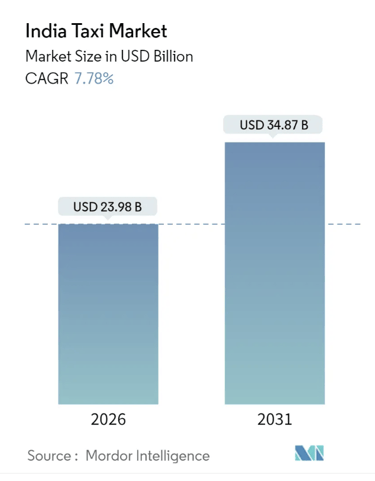
To us, Bharat Taxi is more than just another ride-hailing app. It is an interesting policy experiment. It challenges the status quo, questions the dominance of digital monopolies, and seeks to re-center drivers in the mobility ecosystem. It may not dethrone Uber or Ola, and honestly, that shouldn’t be the benchmark. Its real success would be offering a credible alternative, particularly in the markets where people currently have no choice other than private aggregators or unregulated local operators. Even, the introduction of initiatives such as "Bike Didi," under this platform, has already enrolled over 150 women drivers, has been highly valuable and impactful in addressing safety concerns while enhancing livelihood opportunities.
Whether it becomes a gamechanger or another forgotten initiative depends on its ability to balance technological reliability, build trust, and execute effectively on the ground. For now, it has certainly opened a much-needed conversation in India’s transportation system.