
India’s Energy Transition: What the Shift to Renewables Means for Industry
India has set ambitious targets for renewable energy capacity as part of its broader climate commitments. For industry, this is not just an environmental story: it has direct implications for energy costs, supply reliability, and competitiveness.
Kanav Bajaj
6/22/20264 min read

The Scale of the Shift Underway
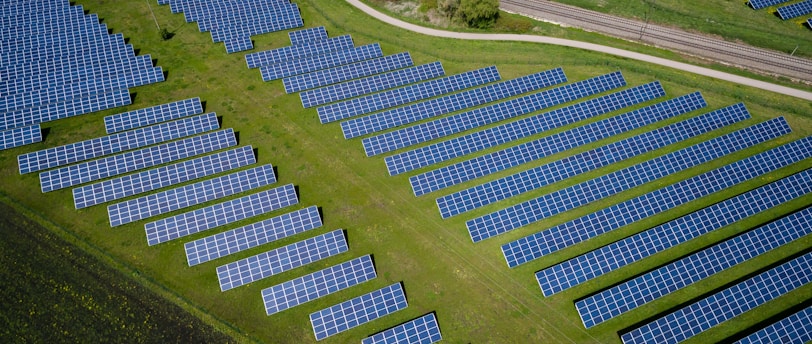
India has been adding renewable generation capacity, particularly solar and wind, at a substantial pace, supported by falling technology costs and sustained policy support. That transition is happening alongside, not instead of, continued reliance on coal-fired power for grid stability, reflecting the practical challenge of balancing fast-growing electricity demand against the pace at which clean capacity can realistically be added.
In practice, this trend has broader implications for strategy, talent, and long term competitiveness. Companies that invest early in capability building, governance structures, digital systems, and leadership development are generally better positioned to adapt to changing market conditions. Executives increasingly need data driven decision making, cross functional collaboration, and a clear understanding of customer expectations. As competition intensifies, organizations must balance growth ambitions with operational discipline, ensuring that expansion does not come at the expense of profitability, resilience, or stakeholder trust.
Another important consideration is execution. Many businesses recognize the opportunity but underestimate the effort required to capture it. Successful organizations typically establish measurable objectives, monitor performance through defined metrics, and review outcomes regularly. They also communicate priorities clearly across teams so that strategic goals translate into day to day actions. Over time, this creates stronger alignment, faster decision making, and a greater ability to respond to disruption while continuing to pursue sustainable growth.
Industrial and commercial consumers are increasingly able to source renewable power directly, through open access and group captive arrangements, rather than relying solely on the traditional grid utility.
Why This Matters Commercially, Not Just Environmentally
Renewable power increasingly offers a genuine cost advantage over grid electricity for many industrial users, particularly where captive or open-access renewable procurement is available. Export-oriented manufacturers also face growing pressure from international buyers and emerging carbon border mechanisms to demonstrate lower-carbon production, making energy sourcing a competitiveness issue, not just a cost one.
In practice, this trend has broader implications for strategy, talent, and long term competitiveness. Companies that invest early in capability building, governance structures, digital systems, and leadership development are generally better positioned to adapt to changing market conditions. Executives increasingly need data driven decision making, cross functional collaboration, and a clear understanding of customer expectations. As competition intensifies, organizations must balance growth ambitions with operational discipline, ensuring that expansion does not come at the expense of profitability, resilience, or stakeholder trust.
Another important consideration is execution. Many businesses recognize the opportunity but underestimate the effort required to capture it. Successful organizations typically establish measurable objectives, monitor performance through defined metrics, and review outcomes regularly. They also communicate priorities clearly across teams so that strategic goals translate into day to day actions. Over time, this creates stronger alignment, faster decision making, and a greater ability to respond to disruption while continuing to pursue sustainable growth.
Reliability remains a genuine consideration alongside cost and carbon intensity, since renewable generation’s intermittency requires either storage investment or continued grid backup to ensure uninterrupted production.
The Practical Challenges Industry Faces
Storage and grid balancing technology, while improving steadily, still adds cost and complexity to a fully renewable industrial energy strategy, particularly for round-the-clock manufacturing operations. Transmission infrastructure in some regions has also not kept pace with where new renewable generation capacity has actually been built, creating bottlenecks between supply and demand.
In practice, this trend has broader implications for strategy, talent, and long term competitiveness. Companies that invest early in capability building, governance structures, digital systems, and leadership development are generally better positioned to adapt to changing market conditions. Executives increasingly need data driven decision making, cross functional collaboration, and a clear understanding of customer expectations. As competition intensifies, organizations must balance growth ambitions with operational discipline, ensuring that expansion does not come at the expense of profitability, resilience, or stakeholder trust.
Another important consideration is execution. Many businesses recognize the opportunity but underestimate the effort required to capture it. Successful organizations typically establish measurable objectives, monitor performance through defined metrics, and review outcomes regularly. They also communicate priorities clearly across teams so that strategic goals translate into day to day actions. Over time, this creates stronger alignment, faster decision making, and a greater ability to respond to disruption while continuing to pursue sustainable growth.
Financing structures for industrial renewable projects, particularly captive generation, require specialized expertise that many mid-size manufacturers have not historically needed to develop in-house.
Building an Industrial Energy Strategy for the Transition
Businesses should treat energy sourcing as a strategic procurement decision, evaluating the full mix of grid power, open-access renewable, and captive generation rather than defaulting to whatever arrangement has historically been in place. Long-term power purchase agreements with renewable generators can lock in favorable, predictable pricing, but require careful structuring around tenure, escalation, and reliability guarantees.
In practice, this trend has broader implications for strategy, talent, and long term competitiveness. Companies that invest early in capability building, governance structures, digital systems, and leadership development are generally better positioned to adapt to changing market conditions. Executives increasingly need data driven decision making, cross functional collaboration, and a clear understanding of customer expectations. As competition intensifies, organizations must balance growth ambitions with operational discipline, ensuring that expansion does not come at the expense of profitability, resilience, or stakeholder trust.
Another important consideration is execution. Many businesses recognize the opportunity but underestimate the effort required to capture it. Successful organizations typically establish measurable objectives, monitor performance through defined metrics, and review outcomes regularly. They also communicate priorities clearly across teams so that strategic goals translate into day to day actions. Over time, this creates stronger alignment, faster decision making, and a greater ability to respond to disruption while continuing to pursue sustainable growth.
For energy-intensive industries especially, the transition timeline should be planned proactively around capital investment cycles, rather than treated as a future problem: energy strategy now bears directly on both cost competitiveness and market access.
In practice, this trend has broader implications for strategy, talent, and long term competitiveness. Companies that invest early in capability building, governance structures, digital systems, and leadership development are generally better positioned to adapt to changing market conditions. Executives increasingly need data driven decision making, cross functional collaboration, and a clear understanding of customer expectations. As competition intensifies, organizations must balance growth ambitions with operational discipline, ensuring that expansion does not come at the expense of profitability, resilience, or stakeholder trust.
Another important consideration is execution. Many businesses recognize the opportunity but underestimate the effort required to capture it. Successful organizations typically establish measurable objectives, monitor performance through defined metrics, and review outcomes regularly. They also communicate priorities clearly across teams so that strategic goals translate into day to day actions. Over time, this creates stronger alignment, faster decision making, and a greater ability to respond to disruption while continuing to pursue sustainable growth.