
India's Semiconductor Ambition: Can the Country Become the Next Global Chip Manufacturing Hub?
Semiconductors are often described as the "new oil" of the digital economy. They power everything from smartphones and laptops to automobiles, satellites, defence systems, and artificial intelligence applications.
Krish Gupta
3/2/20264 min read

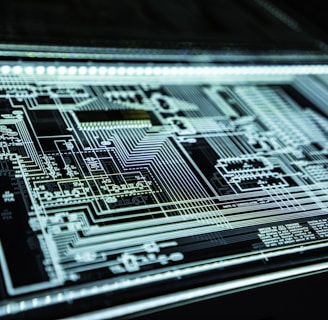
Semiconductors are often described as the "new oil" of the digital economy. They power everything from smartphones and laptops to automobiles, satellites, defence systems, and artificial intelligence applications. In an increasingly digital world, control over semiconductor production is no longer merely an economic advantage but a strategic necessity.
The importance of semiconductors became evident during the COVID-19 pandemic when global supply chains were disrupted, leading to severe chip shortages across industries. Automobile manufacturers halted production, electronics companies delayed product launches, and governments realized the risks associated with excessive dependence on a handful of countries for critical technology components.
Today, more than 75 percent of global semiconductor manufacturing capacity is concentrated in East Asia. Taiwan alone accounts for over 60 percent of global foundry revenue through TSMC, while South Korea, Japan, and China collectively dominate large portions of the semiconductor value chain. The geopolitical tensions between the United States and China, coupled with concerns surrounding Taiwan's security, have prompted countries worldwide to rethink their semiconductor strategies.
India, which imports nearly all of its semiconductor requirements, sees this as both a vulnerability and an opportunity.
The Indian semiconductor market was valued at approximately $35 billion in 2023 and is projected to exceed $100 billion by 2030, driven by growing demand from smartphones, consumer electronics, electric vehicles, industrial automation, data centres, and artificial intelligence. India is already one of the world's largest consumers of electronic devices, yet contributes negligibly to global chip manufacturing. This mismatch lies at the heart of India's semiconductor ambition.
Recognizing the strategic importance of the sector, the Government of India launched the India Semiconductor Mission with a financial outlay exceeding ₹76,000 crore. The objective is straightforward: attract global manufacturers, develop domestic capabilities, reduce import dependence, and establish India as a significant player in the global semiconductor ecosystem.
Several major announcements have followed. Companies such as Micron Technology have committed investments into semiconductor assembly and testing facilities in India. Tata Group has announced semiconductor fabrication and packaging projects in partnership with global technology firms. Multiple states, including Gujarat, Tamil Nadu, and Karnataka, have launched semiconductor-focused policies to attract investment.
However, semiconductor manufacturing is unlike most industries.
Building a modern fabrication facility requires investments often exceeding $10 billion. Advanced chip manufacturing demands highly specialized machinery, ultra-pure water systems, stable electricity supply, sophisticated logistics infrastructure, and an ecosystem of suppliers. A single semiconductor fabrication plant can consume millions of litres of water daily while operating in highly controlled environments.
This raises a critical question: Does India possess the capabilities required to compete?
The answer lies in understanding that semiconductor manufacturing is not a single activity but a value chain consisting of multiple segments. These include chip design, fabrication, assembly, testing, packaging, equipment manufacturing, materials production, and software support.
Interestingly, India already possesses a strong foothold in one of these segments.
Nearly 20 percent of the world's semiconductor design engineers are estimated to be based in India. Global giants such as Intel, Qualcomm, NVIDIA, AMD, Texas Instruments, and Broadcom operate large design centres across Bengaluru, Hyderabad, Noida, and Pune. In other words, while India does not manufacture many chips, it already contributes significantly to designing them.
This creates an interesting strategic advantage.
Rather than immediately competing with Taiwan or South Korea in advanced fabrication, India can strengthen areas where it already possesses capabilities. Semiconductor design services, assembly and testing facilities, advanced packaging, electronic manufacturing, and research-driven innovation may provide more realistic entry points into the ecosystem.
Another factor supporting India's ambitions is the ongoing restructuring of global supply chains. Multinational corporations increasingly seek alternatives to China as part of their diversification strategies. The "China Plus One" approach has become a dominant theme among manufacturers looking to reduce geopolitical risks and improve supply chain resilience.
India stands to benefit from this transition due to its large domestic market, demographic dividend, expanding infrastructure, and improving ease of doing business. However, competing nations such as Vietnam, Malaysia, Singapore, and Mexico are also aggressively pursuing semiconductor investments, making execution critical.
Infrastructure remains one of India's biggest challenges. Semiconductor manufacturing requires uninterrupted power supply, efficient logistics, reliable water availability, and predictable regulatory processes. Delays in any of these areas can significantly impact investor confidence. Historically, large industrial projects in India have faced bottlenecks related to land acquisition, approvals, and coordination among agencies.
Talent development presents another challenge.
Although India produces millions of graduates annually, semiconductor manufacturing requires highly specialized skills spanning material science, electrical engineering, nanotechnology, process engineering, and precision manufacturing. Developing this workforce will require sustained collaboration between universities, government institutions, and industry players.
Yet the opportunity is too significant to ignore.
According to industry estimates, the global semiconductor market could surpass $1 trillion by 2030. Even securing a modest share of this market would generate billions in exports, create high-value jobs, strengthen technological self-reliance, and improve India's position within global value chains.
The strategic implications extend beyond economics. Semiconductors influence national security, defence capabilities, artificial intelligence development, telecommunications infrastructure, and emerging technologies. Countries capable of controlling semiconductor production gain substantial geopolitical leverage.
For investors, the semiconductor opportunity extends far beyond fabrication facilities. Beneficiaries may include electronic manufacturing companies, industrial infrastructure providers, engineering services firms, specialty chemical manufacturers, logistics providers, data centre operators, and educational institutions focused on advanced technology training.
The semiconductor race is ultimately not about building a few factories. It is about creating an ecosystem that integrates research, design, manufacturing, talent, infrastructure, and policy support into a cohesive competitive advantage.
India's ambition is bold, and success is far from guaranteed. However, the country's strong design capabilities, growing domestic demand, government support, and favourable geopolitical positioning provide a foundation that few emerging economies possess.
The coming decade will determine whether India remains primarily a consumer of advanced technology or evolves into a meaningful contributor to its production. If executed effectively, the semiconductor sector could become one of the defining pillars of India's economic transformation, much like information technology was in the late 1990s and early 2000s.
The semiconductor opportunity is not merely about chips. It is about securing India's place in the next era of global economic and technological leadership.